Orchidaceae
Moth orchid care
Phalaenopsis
Also called phalaenopsis, moth orchid, grocery store orchid
Reviewed by Adnan Azam, M.Sc (Hons) Agri. Forestry · Updated November 24, 2026
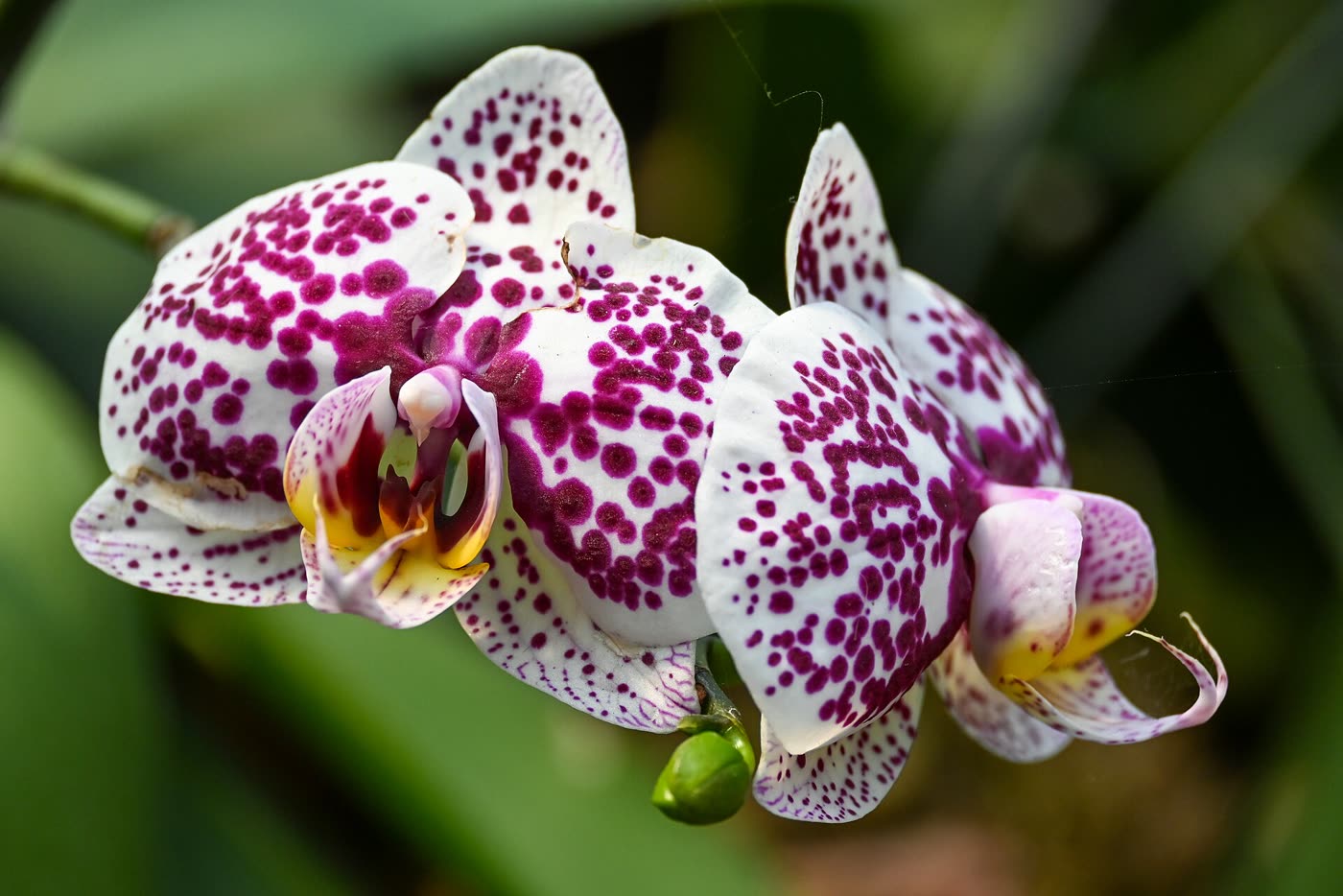

- Light
- Bright indirect
- Water
- Roots silver, then soak
- Humidity
- Average to high
- Pets
- Non-toxic
Pot in bark, not soil. Water when the roots turn silvery, by soaking the pot, then drain it. Never leave water in the crown. Ice cubes are a gimmick that chills the roots. It is non-toxic to pets.
Overview
A moth orchid is an epiphyte. In a pot it is pretending to be on a tree, which is why the mix is bark and why the roots photosynthesize. Green roots are wet. Silvery roots are ready for water. Black, mushy roots are rot.
The ice-cube method was a marketing answer to overwatering. Cold ice against tropical roots is a poor habit. Soak the pot in room-temperature water for ten minutes, drain it fully, and you have done the job the ice was supposed to simplify.
Light
Bright indirect light. An east window is the classic spot. A south window needs a sheer curtain or the leaves bleach and the flowers fade early. Too little light and the plant grows dark green, floppy leaves and no spike. You want leaves that are firm and a medium green, not deep forest green.
Water
Look at the roots through a clear pot if you have one. Silvery means water. Soak for about ten minutes in room-temperature water, including a rinse through the bark, then drain until it stops dripping. Do not use ice. Do not let water sit in the crown of the leaves — tip it out — or the crown rots and the plant is finished. In a cool UK winter, that might be every 10–14 days. In a warm, dry American summer, weekly is common. The bark, not a calendar, decides.
Soil
Medium orchid bark, often with a little sphagnum or perlite. Potting soil kills it. Repot when the bark has turned to dirt, usually every one to two years, after flowering. A clear slotted pot lets you see roots and lets air in. Do not jump to a much larger pot. More bark means more time wet.
Humidity and temperature
Average to slightly high. A tray of pebbles helps in a dry heated room. Mushy flowers and spots on petals are often a still, wet room, not low humidity. Air movement matters as much as moisture.
18–27°C (65–80°F). A slight night drop helps trigger spikes.
Feeding
A weak orchid fertilizer, or any balanced fertilizer at quarter strength, every other watering in spring and summer. Flush with plain water regularly. Salt buildup burns roots that you can see turning brown at the tips. Do not feed a plant with no roots and call it rescue.
Repotting
After the flowers drop, if the bark is broken down or the roots are a solid mass. Trim dead roots — papery and hollow, or black and wet — with sterile scissors. Firm the new bark in so the plant does not wobble. Wait a few days to soak if you cut a lot of root. A spike is not a root. Do not pot the flower stem.
Propagation
A keiki is a baby plant on the flower spike or stem, with roots of its own. Leave it until the roots are several centimeters long, then pot it. You do not divide a phalaenopsis the way you divide a peace lily. One crown is one plant. If the crown rots, a keiki is the rescue, not a prayer.
Through the year
A cooler night, down toward 16°C (60°F), in autumn helps initiate a spike. You do not need a special bloom food as much as you need that temperature swing and enough light. Cut a finished spike above a node if it is still green and you want a possible side branch, or cut it at the base if it has browned. Forcing a tired plant to rebloom off a yellow spike is how you get a weak stick and no flowers.
Pets and toxicity
Phalaenopsis is non-toxic to cats and dogs according to the ASPCA. It is still a bad idea to let a pet chew the flowers and bark. The bigger risk in the house is usually the other plants on the same shelf.
Problems on this plant
- root rot
Black, mushy roots and a wobbly plant. Cut to firm root and repot in fresh bark.
- yellow leaves
The lowest leaf yellowing and dropping after a bloom is often normal. Several yellow leaves and wet bark is rot.
- brown spots
Soft spots that spread from a wet crown are bacterial or fungal. Keep the crown dry.
Do this in order
- Read the roots. Silvery roots get a soak. Green roots do not. Black mush gets cut off.
- Skip the ice. Use room-temperature water and drain the pot and the crown.
- Repot the compost. When bark looks like soil, replace it. Do not move the plant into potting mix.
- Cool nights for a spike. A small autumn temperature drop, plus bright light, does more than a bloom tonic.
Questions
Should I water my orchid with ice cubes?
No. The advice exists to stop people drowning them. A short soak in room-temperature water, then a full drain, gives the roots water without chilling a tropical plant.
Why are orchid roots growing out of the pot?
Those are aerial roots. They are normal. Mistakes start when people bury them in soil or snap them off. Tuck them loosely or leave them. Repot only when the bark has collapsed.
How do I get a moth orchid to flower again?
Bright indirect light, a diluted feed in the growing season, and cooler nights in autumn. Cut a brown spike off at the base. A green spike can be cut above a node. Then wait. Spikes are not monthly.
Tools that match this care
Tools that match this kind of plant. A paid link, when one is added, will be marked and will not change the advice above.
Orchid bark, not potting soil
Phalaenopsis roots rot in peat. They want a chunky bark mix that dries within a week.
Why this helpsA way to get low-mineral water
Spider plants, dracaenas, calatheas, and peace lilies tip-burn on fluoride and salts.
Why this helpsA pebble tray
A cheap local humidity bump for a fern or calathea that sits near a vent.
Why this helps
Related plants
Ask the assistant about this plant. The first replies are free.