Gesneriaceae
African violet care
Streptocarpus ionanthus
Also called Saintpaulia, cape violet
Reviewed by Adnan Azam, M.Sc (Hons) Agri. Forestry · Updated November 24, 2026
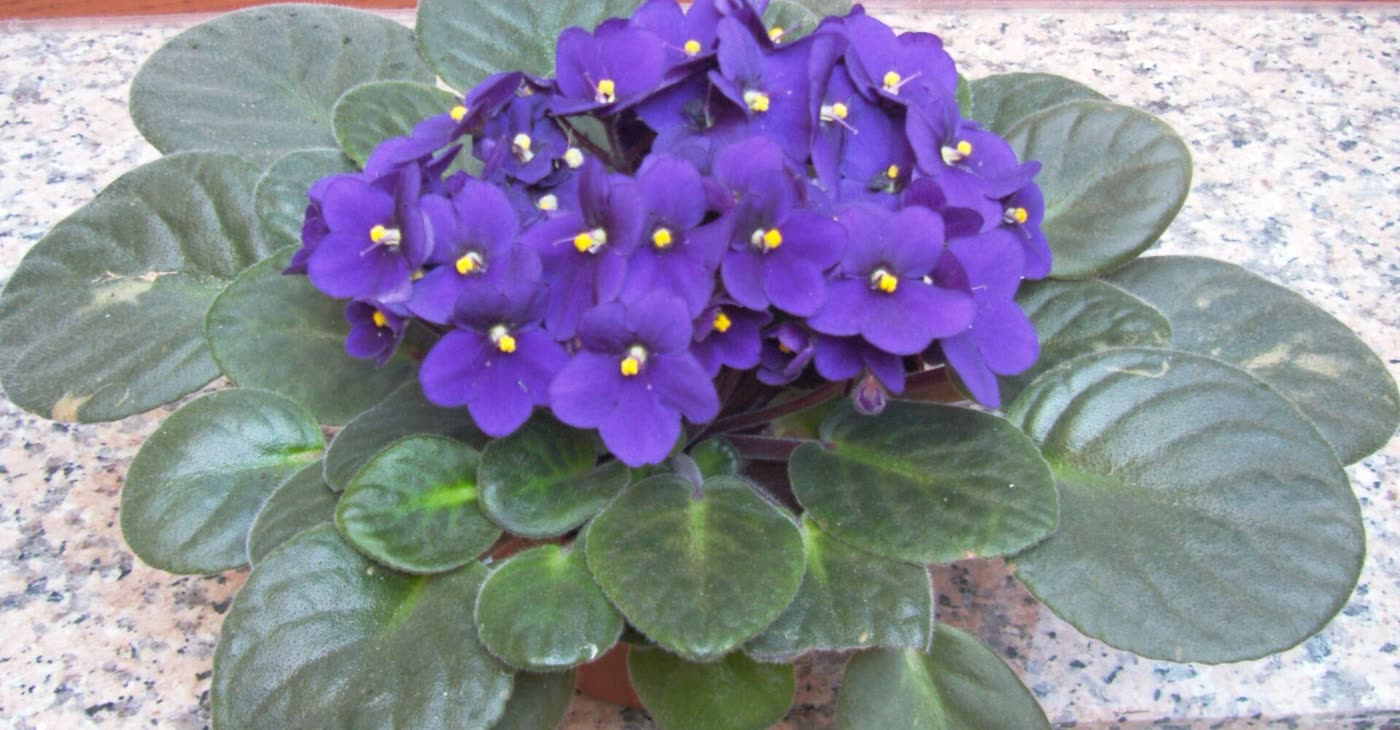

- Light
- Bright indirect
- Water
- Moist, from the bottom
- Humidity
- Average to high
- Pets
- Non-toxic
Bright indirect light, room-temperature water from the bottom, and a small pot. Cold water on the leaves leaves brown rings. It is non-toxic to pets. A healthy violet can flower most of the year.
Overview
African violets are Streptocarpus ionanthus, still called Saintpaulia in most kitchens. They are not related to the peace lily and they are not annual bedding violets. Given a bright sill and careful watering, one plant flowers on and off for years.
The fuzzy leaves stain if you splash them with cold water. That ring is not a fungus. It is a scar. Water the saucer or the pot rim, use room-temperature water, and the leaves stay clean.
Light
Bright indirect light for most of the day. An east window is the classic recommendation. Too little light and the plant grows a long neck and stops flowering. Too much direct sun bleaches the leaves. A grow light 20–30 cm above the plant, 12 hours on a timer, is one of the few cases where a lamp is genuinely the best setup.
Water
Keep the mix lightly moist. Dry violets get crispy edges. Wet violets rot at the crown. Bottom watering avoids the leaves: set the pot in a dish of room-temperature water for 20 minutes, then dump the rest. Do not leave it in a filled saucer all week. Every month, water from the top once, carefully, to flush salts, and keep the water off the crown. Cold water is the enemy. Let it sit until it is not chilly.
Soil
A light, airy mix. Commercial African violet mix, or peat/coir with extra perlite. They have fine roots and prefer a small pot. A violet in a large pot stays wet and rots. If the plant develops a neck — a bare stem under the leaves — repot it a little deeper so the neck is covered, but do not bury the crown.
Humidity and temperature
Average to moderately high. A pebble tray helps in a dry room. Do not mist the fuzzy leaves. Wet hairs plus a cool night invite rot. Grouping plants is enough for many homes.
18–24°C (65–75°F). Cold water on the leaves spots them.
Feeding
A dilute, balanced fertilizer every time you water, at a very weak rate, or a violet fertilizer on the label schedule. They are light feeders that bloom better with steady weak food than with a monthly shock. Flush salts. A white crust on the pot rim is your cue.
Repotting
Twice a year is not crazy for a plant that gets a neck, but many people repot once in spring into the same size pot with fresh mix. Same size is the point. Tease off old, tired roots. A cracked clay pot can be tapped apart. Plastic is easier.
Propagation
A single healthy leaf with 3 cm of stem, set into moist mix at a slight angle, will produce plantlets at the base. This takes weeks to months. Cover loosely for humidity and air it. When the babies have a few leaves, split them off. Variegated leaves sometimes produce plain babies. Label the pot. You will forget what you stuck in it.
Through the year
They can bloom in winter under a lamp. On a windowsill, short days slow them. Keep them out of cold drafts and off frosty glass. A night below about 13°C (55°F) stalls flowering and can mark the leaves. Summer sun needs a sheer curtain.
Pets and toxicity
African violets are non-toxic to cats and dogs. They are a reasonable desk plant in a pet house. The fertilizer and the water in the saucer are still not for drinking. Dump the saucer.
Problems on this plant
- brown spots
Rings and spots from cold water on the leaf are scars. Change how you water.
- leggy plants
A long neck and no flowers means too little light, and it is time to repot the neck deeper.
- root rot
A mushy crown in a wet, oversized pot. Take a healthy leaf and start over.
Do this in order
- Brighten it. An east window or a close grow light. No flowers almost always means too little light.
- Bottom-water, lukewarm. Keep cold water off the leaves. Empty the dish afterward.
- Keep the pot small. A tight pot flowers. A big wet pot rots the crown.
- Start a leaf. One healthy leaf is a backup if the crown ever fails.
Questions
Why are there brown rings on the leaves?
Cold water touched the leaf, or the sun hit a wet leaf. The scar will not fade. Water from the bottom with room-temperature water so the next leaves stay clean.
Why won't my African violet bloom?
Light first. Then check that you are feeding very weakly and that the pot is not huge and soggy. A plant with a long bare neck is telling you it has been too dark.
Are African violets safe for cats?
Yes. The ASPCA lists them as non-toxic to cats and dogs.
Tools that match this care
Tools that match this kind of plant. A paid link, when one is added, will be marked and will not change the advice above.
A full-spectrum grow light
For apartments with one gloomy window, or for keeping variegation from fading.
Why this helpsA way to get low-mineral water
Spider plants, dracaenas, calatheas, and peace lilies tip-burn on fluoride and salts.
Why this helpsA pebble tray
A cheap local humidity bump for a fern or calathea that sits near a vent.
Why this helps
Related plants
Ask the assistant about this plant. The first replies are free.