Araceae
Anthurium care
Anthurium andraeanum
Also called flamingo flower, laceleaf, painter's palette
Reviewed by Adnan Azam, M.Sc (Hons) Agri. Forestry · Updated November 24, 2026

- Light
- Bright indirect
- Water
- Lightly moist
- Humidity
- High
- Pets
- Toxic
Bright indirect light, a chunky aroid mix, and water when the top is barely dry. The red or pink 'flower' is a spathe. Brown tips usually mean low humidity or salts. Toxic to pets. It flowers when light and roots are right, not when you buy bloom food.
Overview
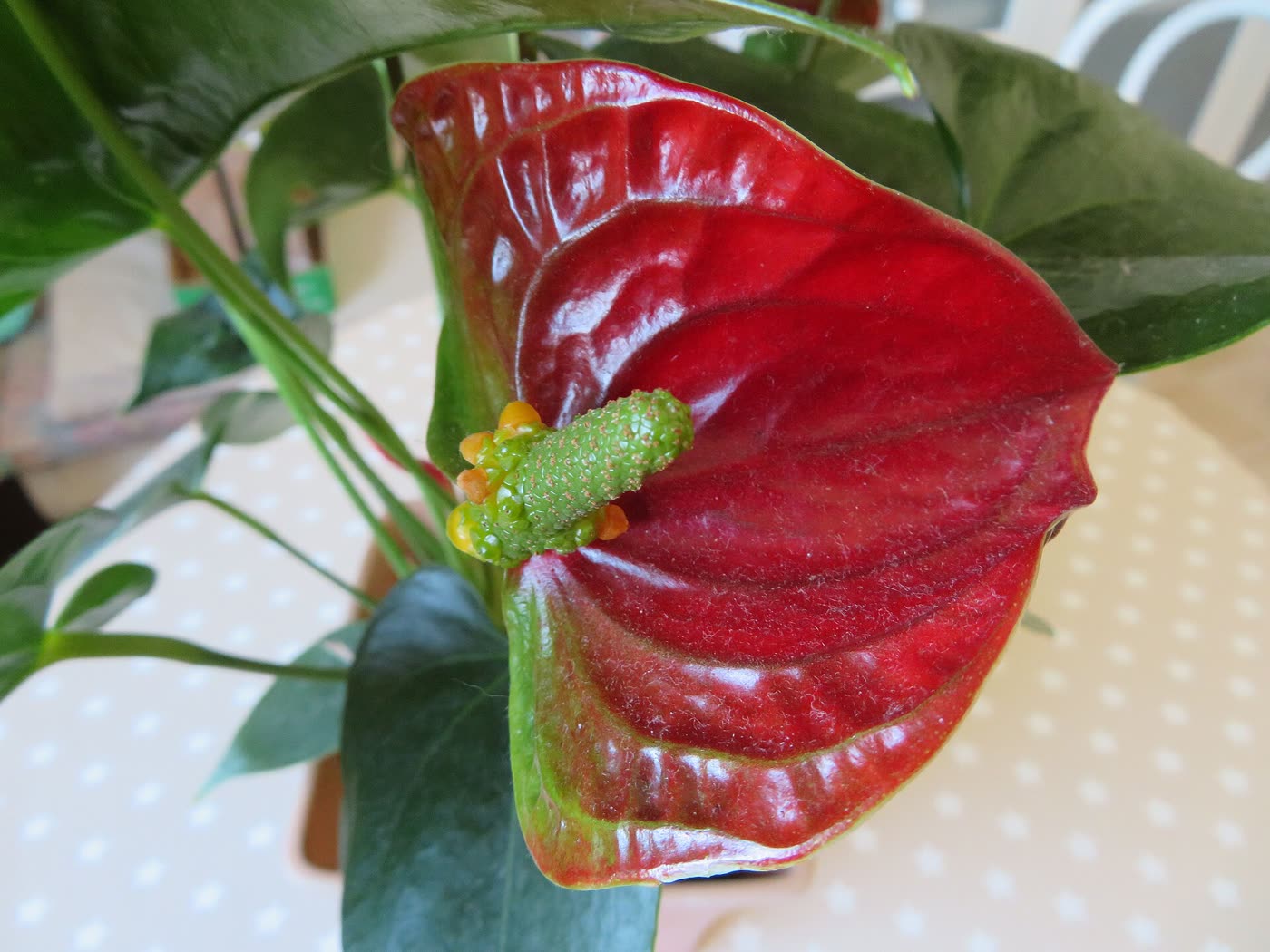
Anthurium andraeanum is the houseplant with the glossy heart and the colored spathe. The real flowers are the little bumps on the spadix. The spathe is a modified leaf. Once you know that, a green or browning spathe is less mysterious: it ages, and it is not a petal you can revive with water.
The roots want air, closer to an orchid than to a fern. A peat puck in a ceramic pot with no hole is why so many gift anthuriums die a month after the holiday.
Light
Bright indirect light. Enough to read easily, not enough to heat the leaf. An east window is ideal. Low light stops flowering and stretches the plant. Direct sun bleaches the spathe and scorches the leaf. If it has not flowered in a year, move it brighter before you change fertilizer.
Water
Keep the mix lightly moist. Let the top centimeter or two dry, then water thoroughly and dump the saucer. These rot if they sit wet, and the spathe edges brown if the pot bakes. Room-temperature, lower-mineral water helps the tips. Do not water on a schedule copied from a succulent, and do not water daily.
Soil
A chunky mix: orchid bark, perlite, and a little peat or coir. Straight potting soil stays wet and the fleshy roots turn brown. A pot with drainage, only slightly larger than the root mass. Aerial roots can be guided back toward the mix. Cutting a few off is not fatal.
Humidity and temperature
Higher than a typical heated bedroom. Brown, dry tips on otherwise firm leaves are the usual complaint in winter. A humidifier or a pebble tray helps. A brown edge on the spathe is often just age. Look at the new leaf, not the oldest flower, when you judge humidity.
18–29°C (65–85°F). Cold stalls flowering.
Feeding
Half-strength balanced fertilizer every two to four weeks in spring and summer. High-phosphorus 'bloom booster' is less useful than simply giving the plant enough light and not rotting the roots. Flush salts monthly if you fertilize regularly. Salt burn and low humidity look similar at the leaf tip.
Repotting
Every couple of years, in spring, when roots circle or the mix has collapsed into mud. Shake off the old bark gently. Do not jump pot sizes. A newly repotted anthurium may skip a flowering cycle. That is acceptable. A rotted one will skip every cycle.
Propagation
Division of a plant that has more than one crown, or stem cuttings on a leggy, older plant that has roots along the stem. Seed is impractical. A single leaf will not give you a new flamingo flower. When you divide, keep roots on each piece and pot them in airy mix.
Through the year
Flowers come in cycles. A healthy plant in bright light can carry spathes much of the year, with a lull in the darkest months. Cut a spent spathe at the base of its stalk when it is brown and papery. Cold windowsills below about 15°C (59°F) stop growth and can blacken tissue. Pull it in from the glass on frosty nights.
Pets and toxicity
Anthuriums are toxic to cats and dogs. Chewing causes mouth pain, drooling, and vomiting. The bright spathe attracts people and sometimes pets. Keep it up, and do not let fallen spathes sit in a pet's bed.
Problems on this plant
- brown leaf tips
Dry tips on new leaves: humidity and salts. A browning spathe may simply be old.
- root rot
Yellow leaves, a wilt that does not recover after watering, and brown roots. Repot into bark.
- yellow leaves
An old leaf yellowing after a new one opens is normal. A flush of yellow is water or light.
Do this in order
- Repot out of dense soil. If it came in heavy peat, move it to bark and perlite once it finishes the current flowers.
- Brighten it to bloom. No spathes usually means not enough light, not a missing tonic.
- Water and drain. Lightly moist, never a saucer of leftovers.
- Cut spent spathes. Remove brown flowers at the stalk. Leave green leaves alone.
Questions
Why is my anthurium flower turning green?
Spathes age, and some varieties fade toward green as they finish. Low light also makes new spathes greener. If the plant is new and the spathe greens immediately, give it brighter indirect light and judge the next one, not this one.
Why are the leaf tips brown?
Low humidity, fertilizer salts, or water that dries out too far between soakings. Check the newest leaf. If only the oldest spathe is brown, that is aging, not a crisis.
Is an anthurium pet safe?
No. It is an aroid, toxic to cats and dogs, even though it is sold next to orchids that are safer.
Tools that match this care
Tools that match this kind of plant. A paid link, when one is added, will be marked and will not change the advice above.
Chunky aroid mix
Bark, perlite, and a bit of peat or coir so monstera and philodendron roots get air.
Why this helpsA room humidifier
Calathea, ferns, and prayer plants brown at the edge when winter air drops below about 40% humidity.
Why this helpsA way to get low-mineral water
Spider plants, dracaenas, calatheas, and peace lilies tip-burn on fluoride and salts.
Why this helps
Related plants
Ask the assistant about this plant. The first replies are free.