Apocynaceae
Hoya care
Hoya carnosa
Also called wax plant, porcelain flower, honey plant
Reviewed by Adnan Azam, M.Sc (Hons) Agri. Forestry · Updated November 24, 2026

- Light
- Bright to some direct
- Water
- Mostly dry
- Humidity
- Average
- Pets
- Non-toxic
Bright light, a chunky mix, and water when the pot is nearly dry. Never cut the stub left after the flowers fall — that peduncle blooms again. Generally non-toxic. Mealybugs hide in the leaf joints.
Overview
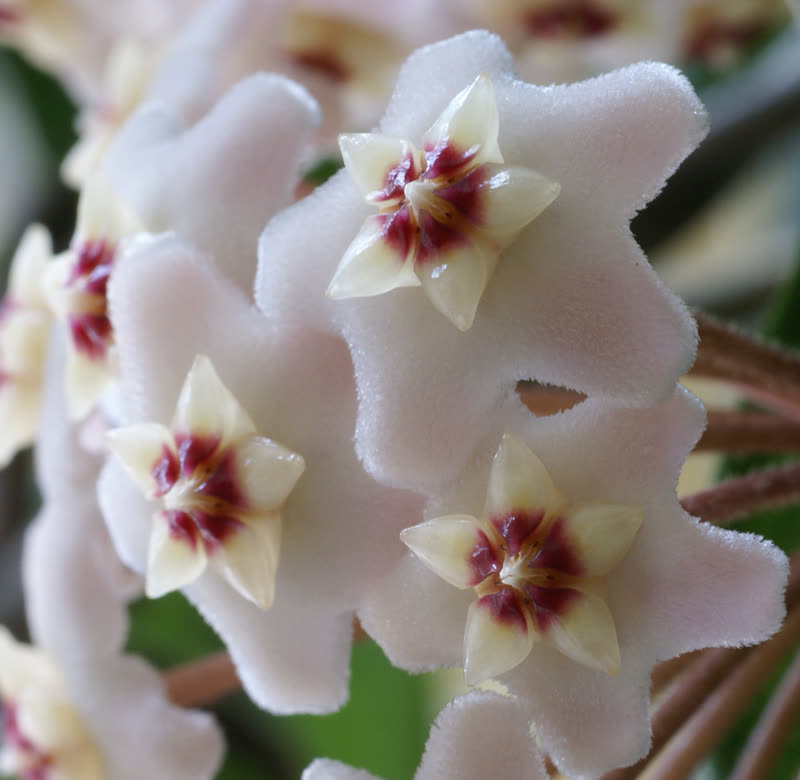
Hoya carnosa is the wax plant. The leaves are thick, the vine is slow until it is not, and the flowers come in clusters that look artificial. People wait years for those flowers and then snip the stalk off when the blooms fade. That stalk, the peduncle, is where the next cluster forms. Leave it.
Hoyas like to be snug, bright, and a bit dry. A huge pot of wet peat grows roots that rot and a vine that never blooms. This is closer to a succulent than to a philodendron.
Light
Bright light, including some direct sun, especially morning. A south or east window. In low light the vine is healthy enough and flowerless. Variegated forms such as 'Krimson Queen' need more light or the new growth stays pale and weak. A little sun stress — a blush on the leaf — is acceptable. A scorched, papery patch is too much, too fast.
Water
Let the mix dry almost completely. The leaves are slightly soft when the plant is truly thirsty, and firm when it is not. Water thoroughly. In winter, if the room is cool, water less. A hoya that yellows and drops leaves from the base of the vine is often wet, not hungry. Do not use a cachepot as a reservoir.
Soil
Chunky: orchid bark, perlite, and a little coir or peat. Aroid mix and succulent mix both work if they drain the same week. Terracotta helps if you overwater. The pot can be smaller than the vine suggests. Root-bound hoyas flower more reliably than freshly potted ones.
Humidity and temperature
Average rooms are fine for carnosa. Some thinner-leaf hoyas are fussier, but the common wax plant does not need a cabinet. Very dry air can crisp a flower. It will not stop a healthy vine. Good airflow matters more, because mealybugs like a stagnant, soft plant.
16–29°C (60–85°F). A cooler winter rest can encourage flowers.
Feeding
Half-strength balanced fertilizer every few weeks in spring and summer. A bloom formula is optional and less important than light and not cutting the peduncle. Do not feed a wet, unhappy plant. Flush the pot a few times a year.
Repotting
Only when the mix has broken down or the pot is distorted. Spring, one size up at most, or the same size with fresh bark. A repot often delays flowering. If it is about to bloom, wait. Do not cut peduncles while you are in there, even if they look like dead sticks. Green or bare, if they are firm, they stay.
Propagation
Stem cuttings with at least one node, ideally two leaves. Root in water, perlite, or damp moss. A leaf without a node may root and sit there forever as a single leaf. That is a known hoya trick and not a plant. Pot cuttings once roots are a few centimeters long, several to a pot.
Through the year
A slightly cooler, drier winter can help carnosa set flowers for the bright months. You do not have to be precise. You do have to stop watering it like a summer vine in a dark January. Flowers last a week or two and may drip nectar. That drip is normal and sticky. Put a cloth under a flowering plant if it hangs over furniture.
Pets and toxicity
Hoya carnosa is widely treated as non-toxic to cats and dogs. It is a reasonable trailer in a pet house, with the usual caveat that any plant can cause a stomach upset if a lot of it is eaten. The nectar is sticky. It is not a reason to panic, and it is not a food.
Problems on this plant
- mealybugs
Check the joints and the peduncles. Cotton there is mealybug, not dust.
- yellow leaves
Yellow leaves on a heavy pot are overwatering. A firm vine can lose an old leaf now and then.
- leggy plants
Long, leafless runners can be a light issue or just a hoya looking for something to climb. Brighten it.
Do this in order
- Brighten it to bloom. A bright window beats a bloom tonic. Low light keeps it green and flowerless.
- Dry the mix. Water when it is nearly dry and the leaves lose a little firmness.
- Keep the flower spurs. Do not cut peduncles after the flowers fall. They rebloom from the same stub.
- Use a chunky pot. Bark and perlite, in a snug pot. Wet peat delays flowers and rots roots.
Questions
Why is my hoya not flowering?
It is usually too young, too dark, or too recently repotted. Give it a brighter window, let it get snug, and leave the peduncles alone. A vine can be healthy for a couple of years before the first cluster.
Can I cut the long leafless vines?
You can, and you may delay flowers if that vine was about to bloom. If it is truly bare and in good light, you can train it instead of cutting it. Hoyas often leaf out once the vine has something to climb.
Are hoyas pet safe?
Hoya carnosa is generally considered non-toxic. Confirm you actually have a hoya. A pothos is not one, and pothos is toxic.
Tools that match this care
Tools that match this kind of plant. A paid link, when one is added, will be marked and will not change the advice above.
Chunky aroid mix
Bark, perlite, and a bit of peat or coir so monstera and philodendron roots get air.
Why this helpsA full-spectrum grow light
For apartments with one gloomy window, or for keeping variegation from fading.
Why this helpsA terracotta pot with a hole
Clay breathes, which is the difference between a living succulent and a wet one.
Why this helps
Related plants
Ask the assistant about this plant. The first replies are free.