Asparagaceae
Spider plant care
Chlorophytum comosum
Also called airplane plant, ribbon plant
Reviewed by Adnan Azam, M.Sc (Hons) Agri. Forestry · Updated November 24, 2026
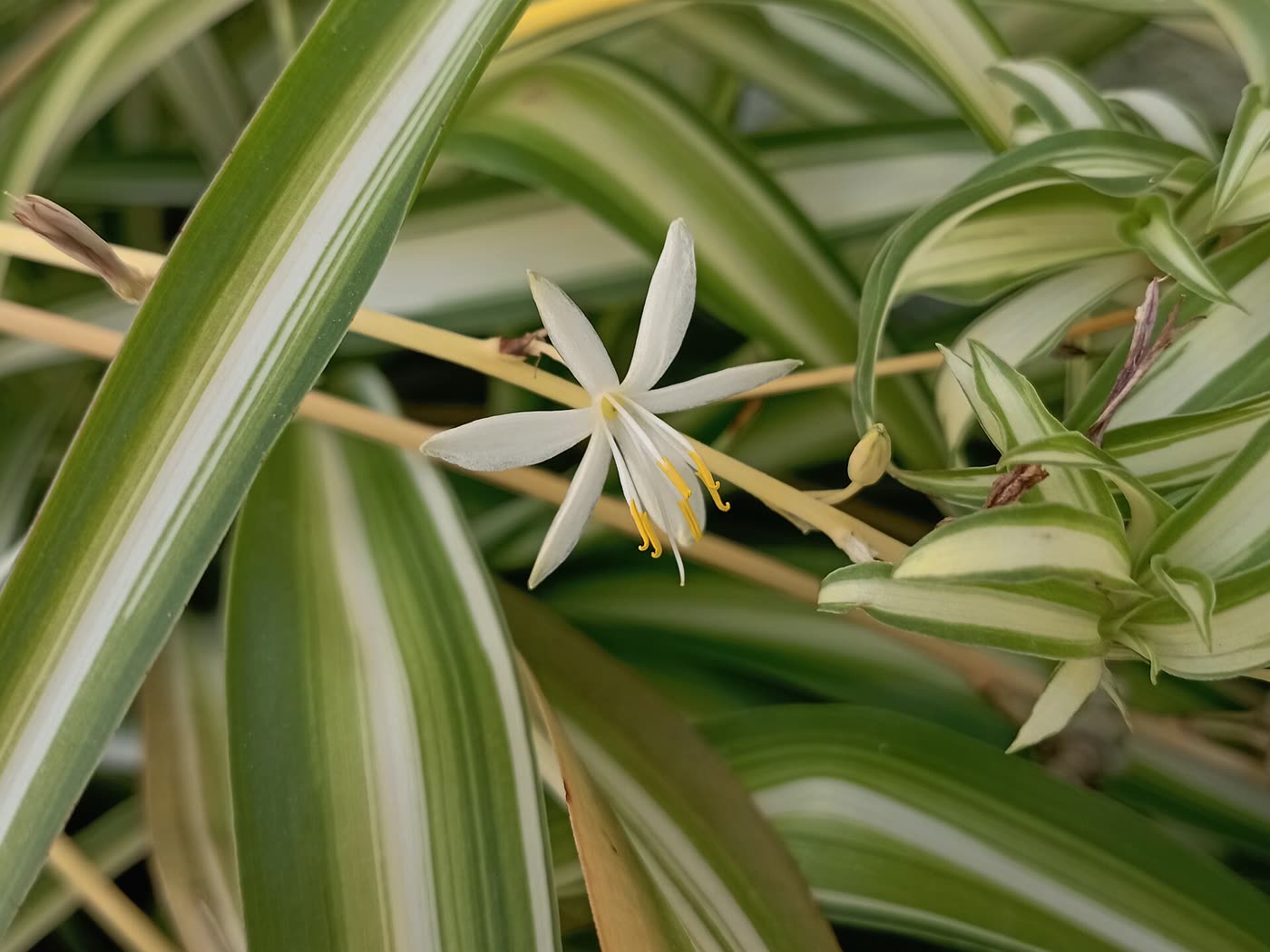

- Light
- Bright indirect
- Water
- Top inch dry
- Humidity
- Average
- Pets
- Non-toxic
Bright indirect light and water when the top inch is dry. Brown tips on an otherwise happy plant are usually fluoride, salts, or a pot that dried out. It is non-toxic to cats and dogs, which is why they chew it.
Overview
Chlorophytum comosum is one of the few common houseplants you can put near a curious cat without reaching for the poison-control number. Cats still shred it. That is a behavior problem, not a toxicity one.
The brown-tip complaint is so common it might as well be on the label. The plant is sensitive to fluoride and to soluble salts. It is also grown in small pots that dry out fast. Both things burn tips. Cutting the brown off without changing the water just gives you a fresh brown edge.
Light
Bright indirect light. Variegated forms ('Vittatum', 'Variegatum') turn greener and leggier in low light, and their white stripes scorch in harsh direct sun. An east window is the easy answer. A few feet from a south window works.
Water
Keep it evenly moist, then let the top inch dry. Do not let it go bone dry until the leaves pale and kink, and do not leave it in a saucer. If tips brown and you have ruled out a baked pot, switch to rainwater or distilled water. Chlorine gassing off overnight does not remove fluoride. Flush the pot every month or two so fertilizer salts do not pile up.
Soil
Standard houseplant mix with extra perlite. They have fleshy storage roots and like a pot that drains. A slightly root-bound plant flowers and pups more willingly than one swimming in a large wet pot.
Humidity and temperature
Average rooms are fine. A heater aimed at the foliage crisps tips faster than dry soil does. Move it off the radiator before you buy a humidifier.
15–27°C (60–80°F). It dislikes hot, dry radiator air.
Feeding
Half-strength feed every few weeks in spring and summer. Overfeeding is a real cause of tip burn on this species. If you see a white crust on the soil, flush, and skip a month.
Repotting
Repot when the pot splits or it dries out every other day. The thick roots are normal, not grubs. You can slice a crowded clump in half in spring. Each division should have leaves and roots.
Propagation
Plantlets on the runners are the easy method. Peg a pup into a small pot while it is still attached, or cut it off once it has little root nubs and set it on damp mix. A pup with no roots at all still roots, more slowly. Seedlings from the small white flowers are possible and pointless if you only want more spider plants.
Through the year
Long, bright days trigger the runners. A spider plant in a dim winter window will pause. Water less when growth stops, and keep it out of cold drafts. It can summer outdoors in shade in mild weather. Bring it in before nights drop near 7°C (45°F).
Pets and toxicity
The ASPCA lists spider plant as non-toxic to cats and dogs. Non-toxic does not mean indestructible. A cat that eats half the plant can still vomit from the fiber. Hang it if the chewing is the problem. The plant will thank you too.
Problems on this plant
- brown leaf tips
The signature spider-plant complaint. Check water quality and salts before you blame humidity alone.
- leggy plants
A pale plant with few stripes needs a brighter window.
- yellow leaves
Soft yellow leaves and a wet pot are overwatering. Pale, kinked leaves are a pot that dried out.
Do this in order
- Brighten variegated plants. Give striped cultivars an east window or a sheer-covered south window.
- Change the water if tips brown. Use rain or distilled water and flush salts from the pot.
- Let the top inch dry. Even moisture, not a swamp and not a brick.
- Root the pups. Pin plantlets into small pots or cut them once root nubs show.
Questions
Why are my spider plant tips brown?
Fluoride and salts in tap water, fertilizer buildup, or letting the pot go bone dry. Trim only the dead part, leave a thin brown margin, and change the water you use.
Why is my spider plant not making babies?
It is usually too young, too dark, or too recently repotted into a huge pot. Bright light and a snug pot encourage runners. Feed lightly in summer, not heavily.
Are spider plants safe for cats?
They are listed as non-toxic. Cats still like to chew the strap leaves. Hang the plant if it is being eaten down to the crown.
Tools that match this care
Tools that match this kind of plant. A paid link, when one is added, will be marked and will not change the advice above.
A way to get low-mineral water
Spider plants, dracaenas, calatheas, and peace lilies tip-burn on fluoride and salts.
Why this helpsA simple moisture meter
Useful while you are still learning the weight of a pot. Do not leave it stuck in the soil.
Why this helpsA full-spectrum grow light
For apartments with one gloomy window, or for keeping variegation from fading.
Why this helps
Related plants
Ask the assistant about this plant. The first replies are free.