Urticaceae
Chinese money plant care
Pilea peperomioides
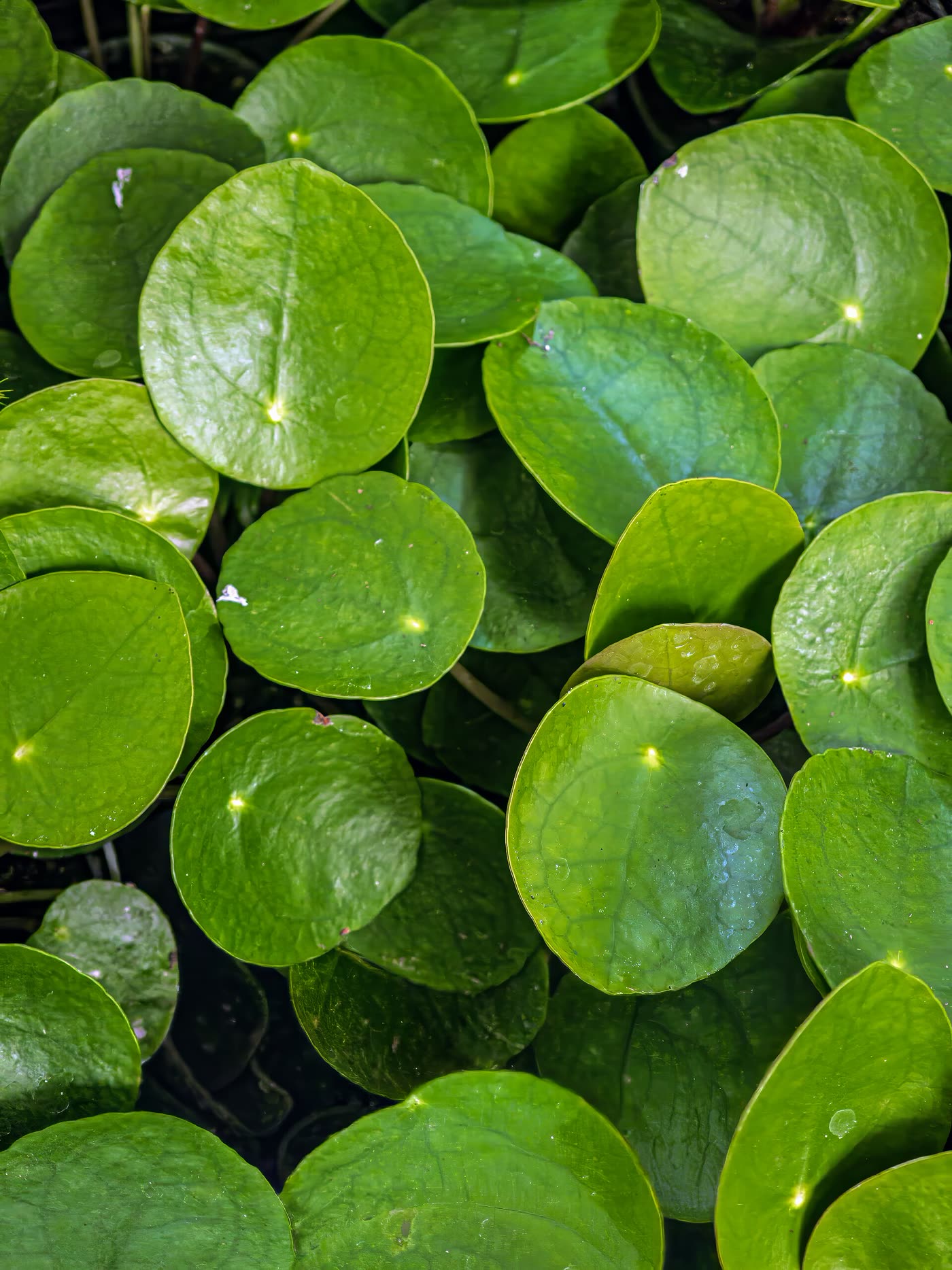
Also called pancake plant, UFO plant, missionary plant, Pilea
Reviewed by Adnan Azam, M.Sc (Hons) Agri. Forestry · Updated November 24, 2026

- Light
- Bright indirect
- Water
- Top inch dry
- Humidity
- Average
- Pets
- Non-toxic
Bright indirect light and water when the top inch is dry. Leaves curling inward often want more light or a drink. Flat, yellow leaves on a wet pot want less water. Pups can be separated once they have roots. Generally treated as pet-safe.
Overview
Pilea peperomioides became the houseplant of the 2010s because the leaves look like coins and the plant pups generously. It is not a succulent, even though the leaves are round, and it is not jade. It wants more frequent water than a succulent and less than a fern.
The leaves track light. A plant that is not rotated becomes a postcard of one-sided growth. A quarter turn each week is the whole styling routine.
Light
Bright indirect light. An east window, or a meter back from a south window. Too little light and the stems stretch, new leaves stay small, and the plant topples. Direct midday sun through glass can bleach a coin to a pale, papery patch. If every leaf cups upward like a satellite dish, it is often reaching for more light. If they curl down hard and the soil is dry, it is thirsty.
Water
Water when the top inch is dry, and water thoroughly. Pilea sulks when it is bone dry — leaves droop and curl — and it yellows lower leaves when the pot stays wet. The sweet spot is a light pot that is not yet wilted. Do not leave it in a saucer. In winter, stretch the interval as growth slows.
Soil
A regular houseplant mix with extra perlite so it drains the same week you water it. A slightly snug pot is better than a bucket. The fleshy stems are top-heavy. A heavier clay pot helps the physics.
Humidity and temperature
Average home humidity is fine. Brown crispy edges are more often dry soil or strong sun than a humidity crisis. You do not need a terrarium.
16–27°C (60–80°F).
Feeding
Half-strength balanced fertilizer every few weeks in spring and summer. Pale new leaves in a bright spot can be hunger. Pale new leaves in a dark spot are light. Feed the first, move the second.
Repotting
In spring, when pups fill the surface or roots circle. This is the moment to separate babies. Pot the mother only one size up. A freshly repotted pilea can droop for a few days. Do not drown it in sympathy.
Propagation
Pups that appear at the base or along the lower stem are the method. Wait until a pup has a short stem and, ideally, its own roots. Cut it off close to the mother, and pot it in a small container of lightly moist mix. Stem cuttings of the top also root in water if the plant got leggy. One leaf will not make a plant.
Through the year
Winter stretching is almost guaranteed in a north-facing UK flat. Move it to the brightest window or add a lamp, and water less. It does not need a cold rest. Cold drafts will droop it overnight.
Pets and toxicity
Pilea peperomioides does not appear on the ASPCA toxic-plant list and is widely regarded as non-toxic to cats and dogs. That is not a promise from a lab report on every cultivar. Treat it as a safer choice than philodendron or jade, and still discourage grazing.
Problems on this plant
- leggy plants
A long bare stem and small top leaves need more light. You can cut and re-root the crown.
- yellow leaves
Lower yellow leaves on a wet schedule are overwatering. A single old leaf now and then is normal.
- leaf drop
Sudden drop after a cold draft or a severe dry-out. Stabilize it. Do not repot the same day.
Do this in order
- Bright, not harsh. An east window or filtered south light. Rotate the pot weekly.
- Dry the top inch. Then soak and drain. Curling plus a light pot means you are late.
- Separate pups. Cut babies with their own roots and pot them small.
- Do not confuse it with jade. Coin leaves are pilea. Thick oval succulent leaves are jade, and jade is toxic.
Questions
Why are my Chinese money plant leaves curling?
Inward curl with dry soil is thirst. Upward cupping toward a window is often too little light. Downward curl with a heavy, wet pot can be overwatering. Check the soil before you change anything else.
When can I remove the babies?
When a pup is a few centimeters tall and has a root of its own, or at least a sturdy little stem. Tiny green dots with no roots are better left on the mother.
Is a Chinese money plant pet safe?
It is widely treated as non-toxic and is not on the common toxic lists. Jade, which shares the money-plant nickname, is toxic. Check the leaf. Coins mean pilea.
Tools that match this care
Tools that match this kind of plant. A paid link, when one is added, will be marked and will not change the advice above.
A simple moisture meter
Useful while you are still learning the weight of a pot. Do not leave it stuck in the soil.
Why this helpsA full-spectrum grow light
For apartments with one gloomy window, or for keeping variegation from fading.
Why this helpsA terracotta pot with a hole
Clay breathes, which is the difference between a living succulent and a wet one.
Why this helps
Related plants
Ask the assistant about this plant. The first replies are free.