Marantaceae
Prayer plant care
Maranta leuconeura
Also called maranta, red prayer plant, herringbone plant
Reviewed by Adnan Azam, M.Sc (Hons) Agri. Forestry · Updated November 24, 2026
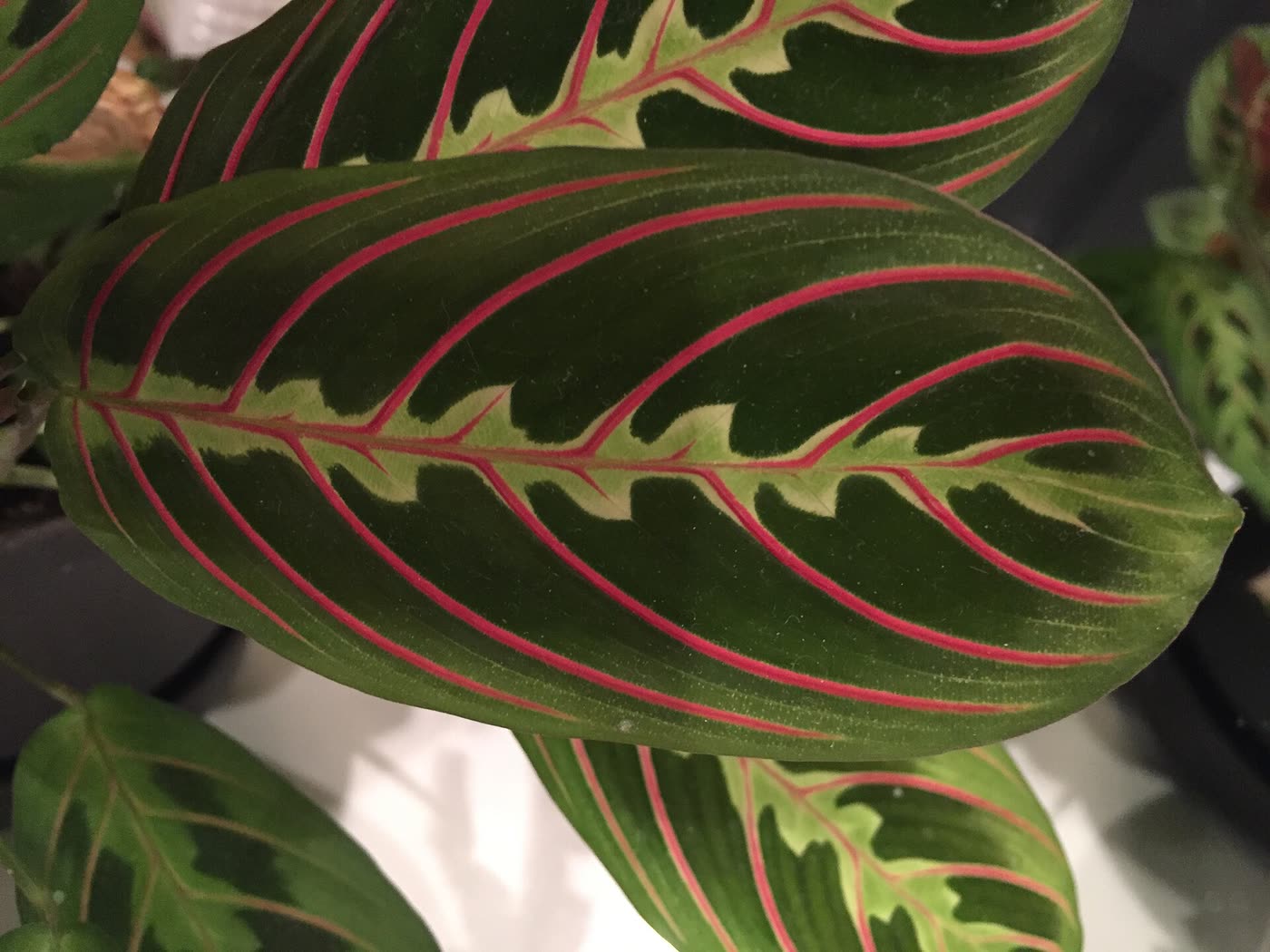

- Light
- Medium indirect
- Water
- Evenly moist
- Humidity
- High
- Pets
- Non-toxic
Medium light, evenly moist soil, and low-mineral water. Leaves that stand up after dark are praying, which is normal. Brown edges are tap water or dry air. It is non-toxic. Spider mites show up in dry rooms.
Overview
Maranta leuconeura is the prayer plant. Calatheas get called prayer plants too, and they move, but the red-veined, low, spreading plant is maranta. It is slightly more forgiving than orbifolia and still not a plant you forget for two weeks.
The evening fold is nyctinasty. Leaves lie flatter in the day and rise at night. If they stay curled in the daytime, that is thirst, low humidity, or too much light. Read the time of day before you panic.
Light
Medium indirect light. An east window or back from a south window. Direct sun fades the red veins and scorches the leaf. Too little light and the pattern dulls and the stems stretch. It does not need a dark corner. It needs a bright room without a burning ray.
Water
Keep the mix evenly moist and not soggy. Let the surface dry slightly. Use rain, distilled, or filtered water. Marantas brown at the edge on hard tap water the same way calatheas do. Room-temperature water only. If the leaves curl and the pot is light, you are late. If the leaves yellow and the pot is heavy, you are early. A self-watering pot can work and can also rot them if the reservoir never empties.
Soil
A moisture-holding mix with perlite so it does not go anaerobic: coir or peat, perlite, and a little bark. Drainage hole required. They have shallow roots and do well in a wider, shallower pot. Do not bury the crown.
Humidity and temperature
High. Dry air crisps the edges and invites mites. A humidifier is the adult solution. A pebble tray is the partial one. Misting leaves spots and does not hold humidity past lunch. In winter, move it off the heating vent before you do anything else.
18–27°C (65–80°F). Cold water and cold drafts mark the leaves.
Feeding
Quarter- to half-strength fertilizer monthly in spring and summer. They are salt-sensitive. Brown tips right after a feed mean flush the pot with distilled water and dilute more next time. No winter feed if growth has stalled.
Repotting
Spring, when roots fill the pot, one size up, without tearing the root ball. You can divide a wide plant at the same time. Each division needs roots and a few stems. Keep divisions humid and out of sun while they settle. They wilt theatrically and often recover.
Propagation
Stem cuttings with a node, just below a leaf, root in water or moist mix. This is easier than dividing if you only want one backup. Cuttings need humidity and patience. A leaf with no node will not grow. Pot them up once roots are a couple of centimeters long.
Through the year
Winter is crisp edges and possible mites. Raise humidity, water a little less, and do not repot. Growth and the strongest leaf color return with longer days. A summer outdoors in deep shade, in a warm climate, can work. Any direct sun or a cold night will set it back. The US and UK indoor winter is the same problem: heating.
Pets and toxicity
Prayer plant is non-toxic to cats and dogs. The ASPCA lists Maranta leuconeura. It is a reasonable choice if you want a patterned leaf and a pet. It is not a reasonable choice if you want zero maintenance. The cat may still sit on it. That is a different issue.
Problems on this plant
- brown leaf tips
Edges brown from tap water, salts, or dry air. Switch water and humidify.
- spider mites
Stippled leaves that stop moving well. Isolate and shower on a weekly cycle.
- yellow leaves
A heavy wet pot yellows them. A single old leaf can yellow as new ones come.
Do this in order
- Let it pray. Upright leaves at night are normal. Daytime curling is the symptom.
- Use better water. Rain or distilled water prevents a lot of the brown-edge complaints.
- Keep it moist and airy. Even moisture in a perlite-rich mix. No saucer of standing water.
- Humidify in winter. Dry heating air is when edges and mites both show up.
Questions
Why do prayer plant leaves fold at night?
It is a normal movement called nyctinasty. They should open again in the morning. Leaves that stay rolled up during the day usually need water, humidity, or less direct sun.
What is the difference between maranta and calathea?
Both are prayer-plant relatives and both hate bad water. Maranta leuconeura is lower and more spreading, and it is a bit easier. Calathea, now mostly Goeppertia, tends to be clumping and fussier. Care on this site is written separately because the details differ.
Are prayer plants pet safe?
Yes. Maranta leuconeura is non-toxic to cats and dogs.
Tools that match this care
Tools that match this kind of plant. A paid link, when one is added, will be marked and will not change the advice above.
A way to get low-mineral water
Spider plants, dracaenas, calatheas, and peace lilies tip-burn on fluoride and salts.
Why this helpsA room humidifier
Calathea, ferns, and prayer plants brown at the edge when winter air drops below about 40% humidity.
Why this helpsA pebble tray
A cheap local humidity bump for a fern or calathea that sits near a vent.
Why this helps
Related plants
Ask the assistant about this plant. The first replies are free.