Asparagaceae
Dragon tree care
Dracaena marginata
Also called Madagascar dragon tree, Dracaena reflexa var. angustifolia
Reviewed by Adnan Azam, M.Sc (Hons) Agri. Forestry · Updated November 24, 2026

- Light
- Medium to bright
- Water
- Top half dry
- Humidity
- Average
- Pets
- Toxic
Medium to bright light and water when the top half of the mix is dry. Brown tips are the default complaint — usually fluoride, dry air, or both. It is toxic to pets. A bare cane can be cut and will branch.
Overview
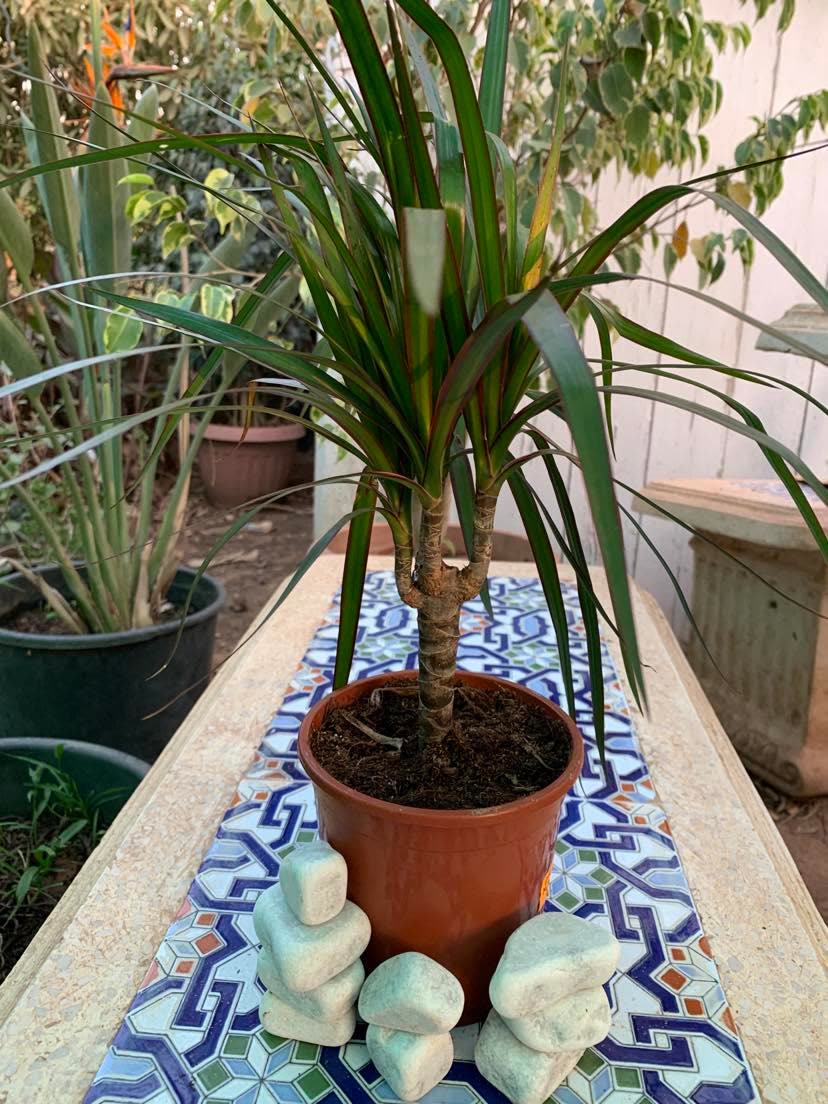
Dracaena marginata is the dragon tree in offices and living rooms: thin woody canes and a tuft of narrow leaves, often edged in red. It is sold as low-light. It tolerates medium light and looks sparse in a dim corner.
Brown tips on this genus are so regular that a plant with perfect tips is the surprise. Fluoride in tap water, low humidity, and a pot that swings from wet to bone dry all burn the same thin point. You will not get a pristine tip by trimming alone.
Light
Bright indirect to medium light. Colorful margins fade in low light, and the tuft gets thin. A few hours of direct morning sun is fine. All-day hot sun through a south window can scorch the red edge into a bigger brown one. If the cane is leaning hard, it is chasing a window. Rotate it, or move it closer.
Water
Let the top half of the mix dry. Then water thoroughly. These rot if the cane sits in wet soil, and the first sign is a soft trunk and a tuft that looks thirsty. That thirst look is a lie. Check the soil. If tips brown and the watering is reasonable, switch to rain or distilled water. Dracaenas are fluoride-sensitive. Overnight tap water is not a fix. Flush the pot so salts leave.
Soil
A free-draining houseplant mix. Add perlite if yours stays wet for two weeks. The pot must have a hole. A large decorative pot with the grower pot left sitting in runoff will rot the cane from the base, and you will not see it until the trunk wrinkles.
Humidity and temperature
Average is acceptable. Very dry winter air lengthens the brown tips. A humidifier helps a little. Misting does not. Keep the plant off the radiator and out of the blast from a floor vent. Cold drafts do the same damage as dry air, faster.
18–27°C (65–80°F). Cold drafts brown the leaf tips overnight.
Feeding
Light feeding in spring and summer, half strength, monthly at most. Overfeeding shows up as more brown tips and a white crust. If you have been feeding and the tips are worse, flush and stop for a couple of months.
Repotting
Every few years. They like to be a bit tight. One pot size up in spring. Do not bury the cane deeper. If the plant is too tall, you can cut the cane. The top can be rooted, and the stump usually sprouts a new tuft or two below the cut if it has light and the roots are healthy.
Propagation
Cane cuttings and top cuttings. Let a cane section dry a day, then pot it upright or lay longer canes horizontally and half-bury them. Warmth matters more than a fancy hormone. Rooting is slow. Do not keep the mix soggy or the cane rots instead of rooting. The stump of the mother plant is often the easiest 'propagation,' because it already has roots.
Through the year
Water less in winter. A dragon tree in a cool room with wet soil is a write-off by February. Brown tips increase when the heating comes on. That is the season to switch water and group plants, not the season to repot. Growth of a new tuft after a cut is a spring and summer event.
Pets and toxicity
Dragon trees are toxic to cats and dogs. Dracaena species are a common pet-poisoning call because they are everywhere and the leaves are easy to chew. Vomiting is the usual sign. Keep the plant up, and do not let trimmed tips fall into the carpet.
Problems on this plant
- brown leaf tips
Assume fluoride and dry air first. Trim the dead point and change the water.
- overwatering vs underwatering
A wrinkled cane and wet soil is rot. Dry soil and limp leaves is thirst.
- leggy plants
Cut a tall bare cane in spring. The stump can resprout in bright light.
Do this in order
- Dry the top half. Then drench and drain. A soft trunk means you have been too generous.
- Change the water. Use rain or distilled water if tips brown, and flush salts.
- Give it medium-bright light. Dim corners make a thin, leaning cane with no red edge.
- Cut, do not stake forever. A too-tall plant can be shortened. The stump and the top are both useful.
Questions
Why does my dragon tree have brown tips?
Fluoride and other minerals in tap water, low humidity, or fertilizer salts. It is the most common dracaena complaint. Use low-mineral water, flush the pot, and keep it off the heater. You can trim the brown, leaving a thin margin.
Can I cut the top off a dragon tree?
Yes. Cut in spring with a clean blade, root the top in a free-draining mix, and leave the cane in bright light. New growth usually breaks below the cut. Do not do this to a plant that is already rotting.
Is Dracaena marginata safe for cats?
No. Dracaenas are toxic to cats and dogs. If a cat is vomiting and you have a chewed dragon tree, call a vet.
Tools that match this care
Tools that match this kind of plant. A paid link, when one is added, will be marked and will not change the advice above.
A way to get low-mineral water
Spider plants, dracaenas, calatheas, and peace lilies tip-burn on fluoride and salts.
Why this helpsA simple moisture meter
Useful while you are still learning the weight of a pot. Do not leave it stuck in the soil.
Why this helpsA full-spectrum grow light
For apartments with one gloomy window, or for keeping variegation from fading.
Why this helps
Related plants
Ask the assistant about this plant. The first replies are free.