Araceae
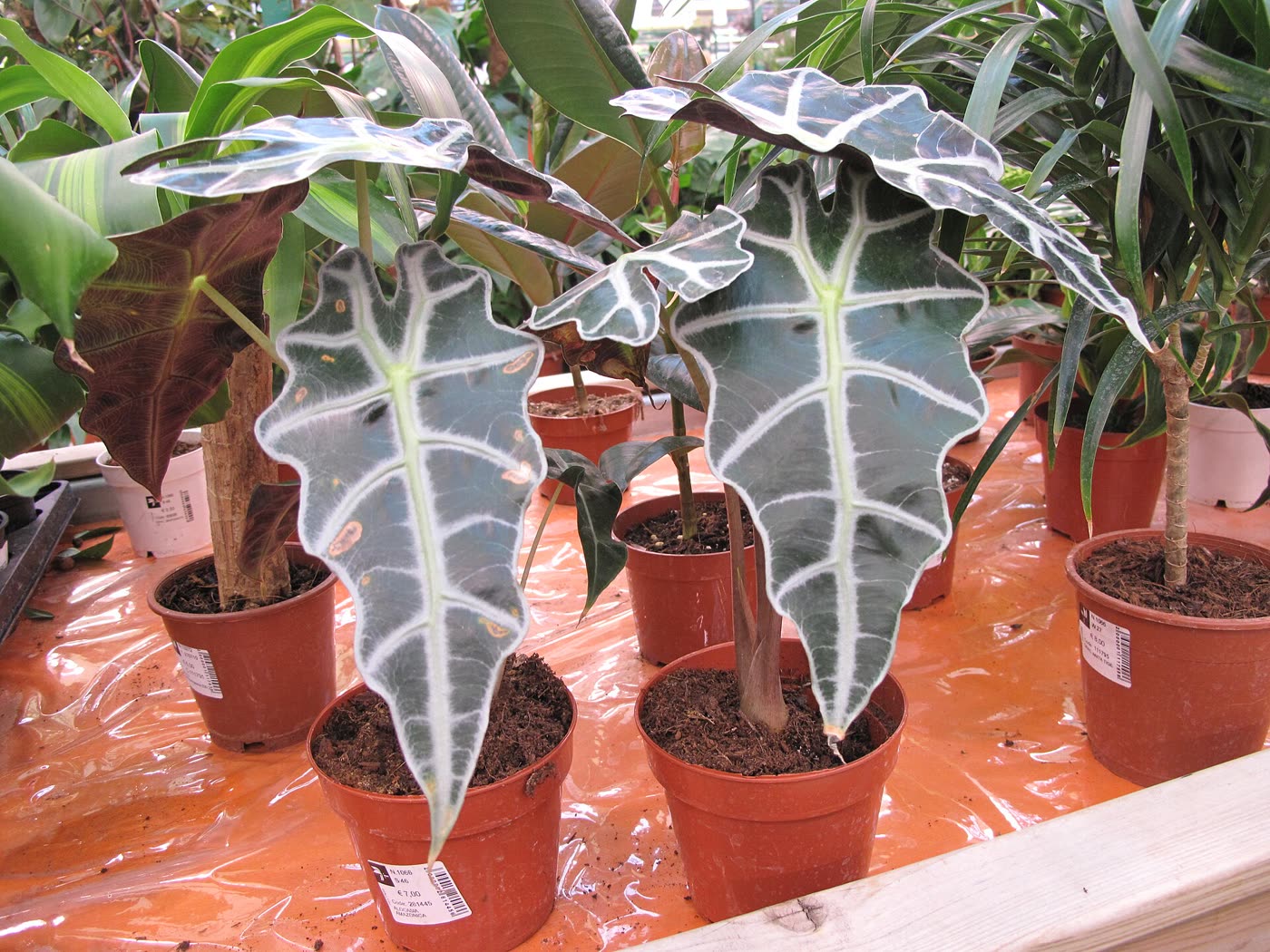
Alocasia Polly care
Alocasia × amazonica 'Polly'
Also called African mask, Alocasia amazonica, jewel alocasia
Reviewed by Adnan Azam, M.Sc (Hons) Agri. Forestry · Updated November 24, 2026

- Light
- Bright indirect
- Water
- Evenly moist in growth
- Humidity
- High
- Pets
- Toxic
Bright indirect light, a chunky mix kept lightly moist while it has leaves, and high humidity. If it drops every leaf but the rhizome is firm, it may be dormant, not dead. Spider mites are the main pest. Toxic to pets.
Overview
Polly is a compact hybrid sold as Alocasia amazonica. It is not a beginner plant, and it is not a calathea either, though people lump them together as 'dramatic.' Alocasias grow from a rhizome and can go dormant. A bare pot in winter is sometimes a resting plant.
The other way a Polly goes bare is spider mites, which speckle the leaf and then the leaf yellows and drops. Look under the leaf before you call it dormancy. A dormant rhizome is firm. A rotted one is mush.
Light
Bright indirect light. Too little and the petioles stretch and the plant never holds more than one sad leaf. Direct sun burns the arrow leaf quickly, leaving pale patches. An east window or a filtered south window is the band. A grow light close overhead works well and makes mites easier to see, which is useful.
Water
While it is in leaf and growing, keep the mix lightly moist. Let the surface dry, not the entire pot. These are not ZZ plants. They are also not pond plants. A heavy, sour pot rots the rhizome. In dormancy — no leaves, cool room, short days — water only enough to keep the rhizome from desiccating, every few weeks. Guttation, a drop of water at the leaf tip in the morning, is normal on a well-watered alocasia. It is not a disease.
Soil
Chunky and airy: bark, perlite, and a moisture-retentive base. The thick roots rot in compact peat. A clear or nursery pot inside a cachepot lets you check moisture. Do not size up dramatically. Extra wet mix around a small rhizome is how Polly dies after a 'helpful' repot.
Humidity and temperature
High humidity keeps the leaf edge from crisping and makes spider mites less eager. It does not eliminate mites. A humidifier plus a weekly look under the leaves is the actual routine. Misting is not a mite treatment.
18–29°C (65–85°F). Cold and wet causes dormancy or rot.
Feeding
Half-strength balanced fertilizer every two to three weeks in active growth. Stop when the plant is dormant or struggling. A yellowing plant in wet soil does not need nitrogen. It needs air.
Repotting
In spring, only when root-bound, one size up. You may find corms — small round offsets. You can pot those shallowly in moist perlite and see if they sprout. Do not repot a plant that just dropped its leaves until you know whether the rhizome is firm. Repotting a rot case spreads the mess.
Propagation
Division of rhizomes and potting of corms. A leaf cutting will not root the way a pothos cutting does. Separate plants when each has roots, in warm weather. Corms can take a long time. Keep them humid and do not bury them deep.
Through the year
Short days and cool rooms trigger dormancy in many indoor alocasias. Leaves yellow one by one until nothing is left. If the rhizome is firm, keep it barely moist and wait until spring. If you keep the plant very warm and under lights, it may skip dormancy and keep growing. Both outcomes are normal. Rot is the one that is not: a smell, a soft base, fungus gnats exploding.
Pets and toxicity
Alocasia is toxic to cats and dogs. The sap causes immediate oral pain and vomiting. The leaves are arrow-shaped and easy to bite. This is a poor floor plant in a pet house.
Problems on this plant
- spider mites
The default pest. Stippling, then yellow collapse. Shower and repeat on a weekly cycle.
- yellow leaves
One old leaf yellowing as a new one unfurls can be normal. All of them at once needs a root check.
- root rot
A soft rhizome does not get to be called dormant. Cut back to firm tissue.
Do this in order
- Bright and humid. Filtered light and a humidifier. Check the leaf underside every week.
- Moist, not wet. In growth, water when the surface dries. In dormancy, barely water a firm rhizome.
- Do not bin a bare pot. Feel the rhizome. Firm and quiet can wait until spring. Soft and sour cannot.
- Isolate at the first speckle. Mites spread to calathea, ivy, and palms. Treat more than once.
Questions
My Alocasia Polly lost all its leaves. Is it dead?
Not always. If the rhizome is still firm, it is likely dormant or recovering from mites. Keep it barely moist and warm, and wait for a spike in spring. If the rhizome is mushy, it is rot and you should cut for any firm piece or start over.
Why do water drops sit on the leaf tip?
Guttation. The plant is pushing out extra water. It is common the morning after a watering. It is not sap and it is not a reason to stop watering entirely. Do not let the pot stay soggy.
How do I stop spider mites coming back?
One shower is not a treatment. Repeat every 5–7 days for three or more rounds, because eggs hatch. Raise humidity, isolate the plant, and look at every plant that touched it.
Tools that match this care
Tools that match this kind of plant. A paid link, when one is added, will be marked and will not change the advice above.
Chunky aroid mix
Bark, perlite, and a bit of peat or coir so monstera and philodendron roots get air.
Why this helpsA room humidifier
Calathea, ferns, and prayer plants brown at the edge when winter air drops below about 40% humidity.
Why this helpsInsecticidal soap
A contact spray for aphids, mites, and mealybugs. It only works where the liquid touches the insect.
Why this helps
Related plants
Ask the assistant about this plant. The first replies are free.