Marantaceae
Calathea orbifolia care
Goeppertia orbifolia
Also called Calathea orbifolia, round-leaf calathea
Reviewed by Adnan Azam, M.Sc (Hons) Agri. Forestry · Updated November 24, 2026
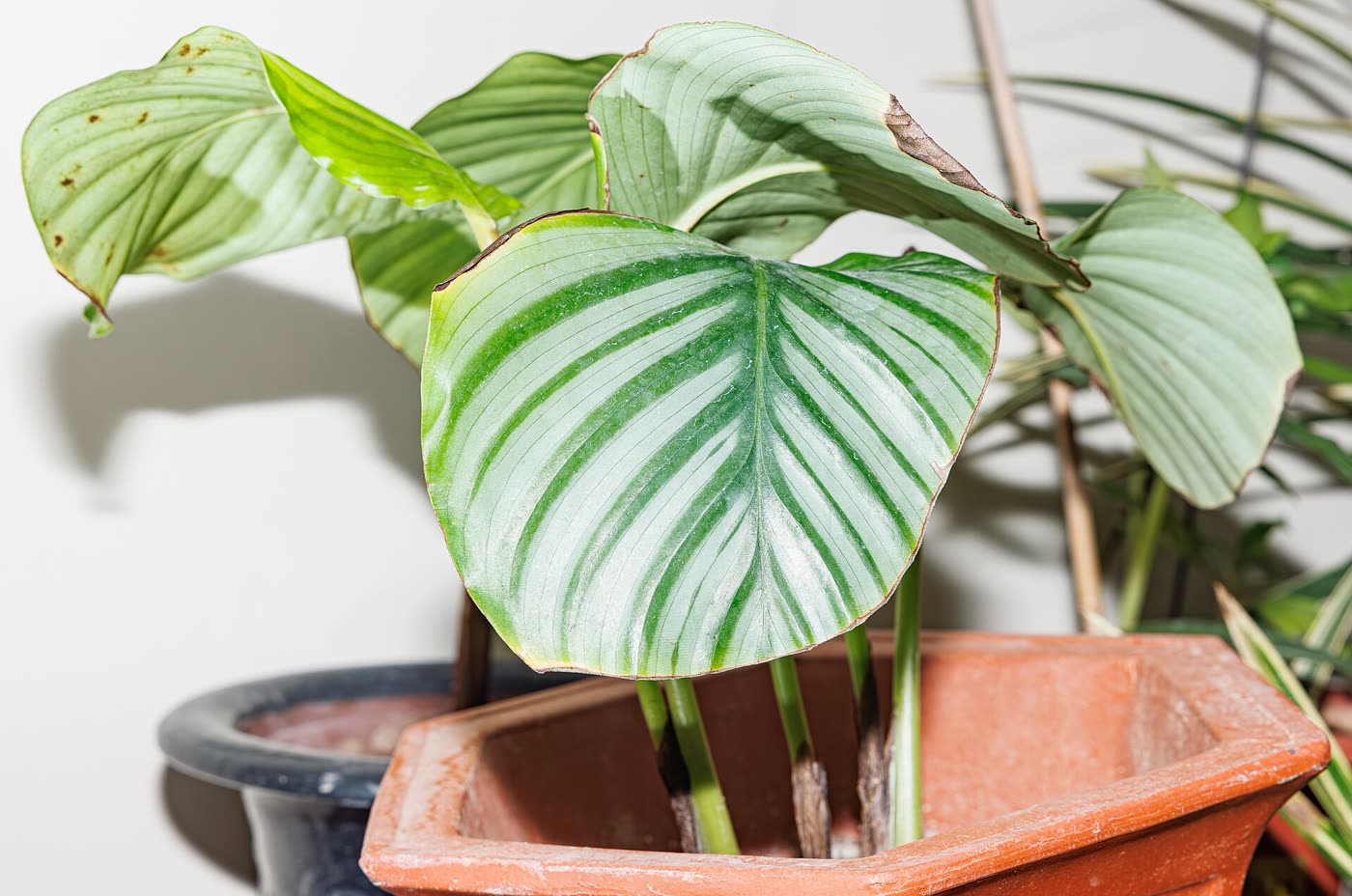

- Light
- Medium indirect
- Water
- Evenly moist
- Humidity
- High
- Pets
- Non-toxic
Medium light, never bone-dry soil, and low-mineral water. Brown edges are usually tap water or dry air. Curling leaves are thirst or low humidity. It is pet-safer than a pothos and fussier than one.
Overview
Orbifolia was sold for years as Calathea and now sits in Goeppertia. The care did not change with the name. It is a thin-leaf understory plant that wants steady moisture, soft light, and water that is not full of fluoride and salts.
If you want an easy green plant, pick a ZZ. If you want this one, budget for a filter jug or a rain barrel and a humidifier in winter. People who succeed with orbifolia are consistent, not talented.
Light
Medium, indirect light. An east window or well back from a south window. Direct sun bleaches the silver stripes and crisps the edge. Too little light and the plant stalls, then rots, because you keep watering a pot that is not using water. Leaves fold up at night. That movement is normal, not a crisis.
Water
Keep the mix evenly moist and never soggy. Let the surface barely dry. Distilled, rain, or genuinely filtered water is the brown-edge fix that actually works. Leaving tap water out overnight does not remove fluoride. Water at room temperature. Cold shock plus salts is how you get a ring of dead tissue. If the pot is heavy and smells sweet or sour, you have overcorrected.
Soil
A moisture-retentive mix that still has perlite: peat or coir, perlite, and a little bark. A plastic pot holds moisture longer than terracotta, which this plant often prefers. The pot still needs a drainage hole. A self-watering pot can work if the reservoir is allowed to empty, and it can rot the plant if it never does.
Humidity and temperature
This is the care step people skip. Below about 40–50% humidity, edges brown even when watering is perfect. Grouping plants is a small help. A humidifier is the real one. Misting leaves a spotted leaf and a brief thrill. Dry air also invites spider mites, which this genus collects.
18–27°C (65–80°F). Cold drafts collapse the leaves.
Feeding
Quarter- to half-strength fertilizer monthly in spring and summer. They are sensitive to salt. Flush the pot with distilled water if tips brown after you have been feeding. Do not feed a struggling winter plant.
Repotting
In spring, when roots fill the pot, into a container one size up. They dislike root disturbance. Do not tear the root ball apart to 'loosen it.' Keep the same soil line. The crown should not be buried.
Propagation
Division in spring. Each piece needs roots and at least one healthy fan of leaves. This is not a node-cutting plant like pothos. Keep divisions warm, humid, and out of direct sun while they settle.
Through the year
Winter heating is the enemy: dry air, cold glass, and a grower who keeps the summer watering schedule. Raise humidity, pull it off the window if the pane is frigid, and water a little less — less, not dry. Growth resumes as days lengthen.
Pets and toxicity
Goeppertia and Calathea species are widely listed as non-toxic to cats and dogs, including by the ASPCA for Calathea. That is one reason people try them. The plant is still easier to kill than to poison. Non-toxic is not a license for a pet to graze it down.
Problems on this plant
- brown leaf tips
Edges brown from tap water, salts, or dry air. Change the water and the humidity together.
- spider mites
Fine speckles and webbing. Shower the leaves and repeat weekly. Isolate it.
- yellow leaves
Yellow plus wet and limp is overwatering. Yellow plus curling and light soil is thirst.
Do this in order
- Soften the water. Use rain, distilled, or filtered water, not overnight tap water.
- Keep it slightly moist. Never a swamp, never a dry brick. The surface can dry. The core should not.
- Humidify the room. A humidifier in winter beats misting. Aim for the air, not wet leaves.
- Check under the leaf. Spider mites love this plant. Look before the stripes go dull.
Questions
Why does my calathea have brown edges?
Tap-water minerals and dry air, sometimes together with fertilizer salts. Switch to low-mineral water, flush the pot, and raise humidity. Trimming the brown does not stop the cause.
Why do the leaves stand up at night?
Nyctinasty. Prayer plants and calatheas fold or raise leaves after dark. It is normal if the leaves open again in the morning. Leaves that stay curled in the day are asking for water or humidity.
Is Calathea orbifolia pet safe?
It is in the group generally listed as non-toxic to cats and dogs. It is also a poor choice if you want an easy plant. Pick it for the leaves, not because it is simple.
Tools that match this care
Tools that match this kind of plant. A paid link, when one is added, will be marked and will not change the advice above.
A way to get low-mineral water
Spider plants, dracaenas, calatheas, and peace lilies tip-burn on fluoride and salts.
Why this helpsA room humidifier
Calathea, ferns, and prayer plants brown at the edge when winter air drops below about 40% humidity.
Why this helpsA pebble tray
A cheap local humidity bump for a fern or calathea that sits near a vent.
Why this helps
Related plants
Ask the assistant about this plant. The first replies are free.