Araceae
ZZ plant care
Zamioculcas zamiifolia
Also called Zanzibar gem, Zuzu plant, eternity plant
Reviewed by Adnan Azam, M.Sc (Hons) Agri. Forestry · Updated November 24, 2026
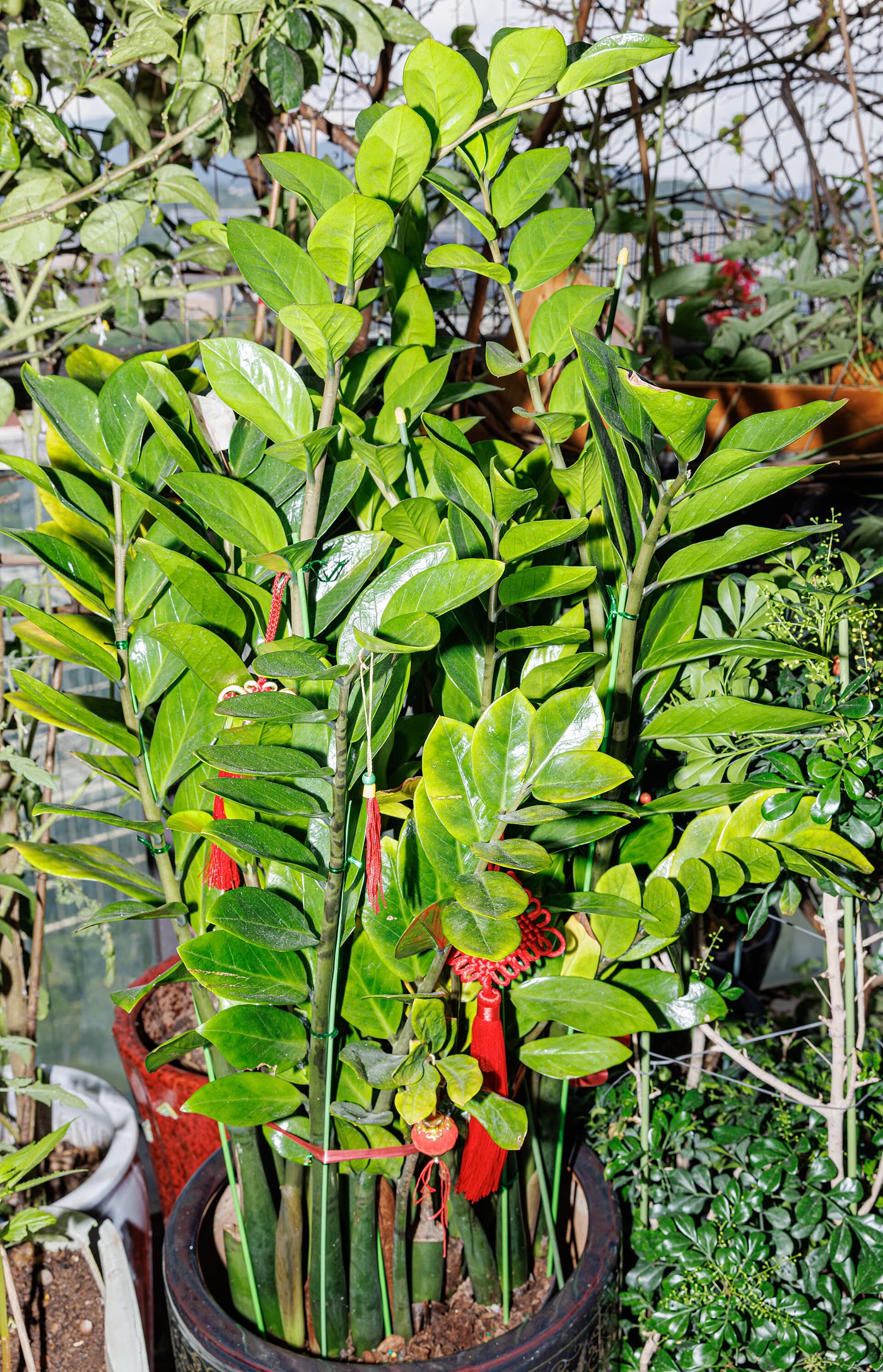

- Light
- Low to bright indirect
- Water
- Bone dry
- Humidity
- Dry air is fine
- Pets
- Toxic
Water only after the mix has been dry for a while — often every three to four weeks, longer in winter. Bright indirect light is better than a cave. Yellow stems mean rot, not hunger.
Overview
The ZZ plant stores water in potato-like rhizomes under the soil and in its thick petioles. That is the whole care manual. People kill them by watering a low-light plant every Sunday because the leaves still look shiny.
Raven and variegated forms need more light than the standard green plant or the color muddies. None of them need a greenhouse.
Light
Low light is tolerated. Bright indirect light is where it actually grows. A ZZ in a windowless bathroom will survive on stored reserves and then thin out. Direct harsh sun can scorch the leaflets. An east window is close to ideal.
Water
Let the pot dry completely, then wait a bit longer, then soak it. In a plastic pot in medium light, three to four weeks in the growing season is common, and winter can be six weeks or more. The rhizomes should stay firm. If stems yellow from the base and feel soft, you watered a dormant plant.
Soil
A well-drained mix: houseplant compost with extra perlite, or a cactus mix cut with a little regular compost. Drainage hole required. A heavy, peat-packed pot in a cachepot is the usual crime scene.
Humidity and temperature
Irrelevant for practical purposes. Brown leaflet tips are more often a dry, forgotten pot or physical damage than humidity. Do not mist.
18–30°C (65–86°F). Avoid cold, wet roots.
Feeding
Once or twice during spring and summer at half strength. The plant grows in flushes: nothing for months, then a spear that unfurls into a whole stem. Feeding during the nothing months does not speed that up.
Repotting
Rhizomes will eventually split a pot. Repot in spring into a container only slightly wider. Tease the mix gently. The rhizomes bruise, and a bruised rhizome in wet soil rots. This is a slow plant. It does not need a new pot every year.
Propagation
Division of rhizomes is fastest. Leaflet cuttings work and are slow: a single leaflet can take months to form a rhizome in barely moist perlite. Do not water a cutting the way you water a pothos cutting. Damp, not wet.
Through the year
Respect the stall. A ZZ that does nothing all winter is behaving. Water less when light drops. New stems in spring arrive as spikes. Do not pull a shoot that looks like a dead stick until you are sure it is soft.
Pets and toxicity
ZZ plants are toxic to cats and dogs. Chewing causes immediate irritation, drooling, and vomiting. The leaves are glossy and tempting. Put it up if you have pets that sample plants.
Problems on this plant
- yellow leaves
A whole stem turning yellow is almost always a wet rhizome, not a nutrient deficiency.
- root rot
Soft rhizomes should be cut back to firm tissue and potted drier.
- leggy plants
Stems that stretch and leaflets spaced far apart need more light.
Do this in order
- Wait longer than you want. Dry soil all the way down, then a pause, then a soak.
- Use a draining pot. Glossy leaves do not mean the plant likes a wet cachepot.
- Give variegates more light. Raven and variegated ZZs fade in the same corner a green one tolerates.
- Cut soft stems. Yellow at the base means that stem is done. Check the rhizome before you water again.
Questions
How often should I water a ZZ plant?
Far less often than a tropical foliage plant. Every three to four weeks in active growth is typical, and less in winter. The soil has to be dry. When in doubt, skip the week.
Why is my ZZ plant not growing?
It grows in bursts. Low light and a huge pot make the bursts rare. If the rhizomes are firm, leave it alone and brighten it. If they are soft, you have rot, not a slow plant.
Can a ZZ live in an office with no windows?
For a while, under bright overhead LEDs, maybe. In a dark corner it lives off the rhizome and declines. A grow light on a timer is the honest fix.
Tools that match this care
Tools that match this kind of plant. A paid link, when one is added, will be marked and will not change the advice above.
Gritty succulent mix
At least half pumice, perlite, or fine gravel. This is what keeps jade, aloe, and echeveria alive indoors.
Why this helpsA terracotta pot with a hole
Clay breathes, which is the difference between a living succulent and a wet one.
Why this helpsA full-spectrum grow light
For apartments with one gloomy window, or for keeping variegation from fading.
Why this helps
Related plants
Ask the assistant about this plant. The first replies are free.