Araceae
Monstera adansonii care
Monstera adansonii
Also called Swiss cheese vine, monkey mask, Adanson's monstera
Reviewed by Adnan Azam, M.Sc (Hons) Agri. Forestry · Updated November 24, 2026

- Light
- Bright indirect
- Water
- Top inch or two dry
- Humidity
- Average to high
- Pets
- Toxic
Bright indirect light, a chunky mix, and water when the top couple of centimeters are dry. It holes earlier in life than deliciosa and dries out faster in a small pot. Toxic to pets. A pole makes bigger leaves.
Overview
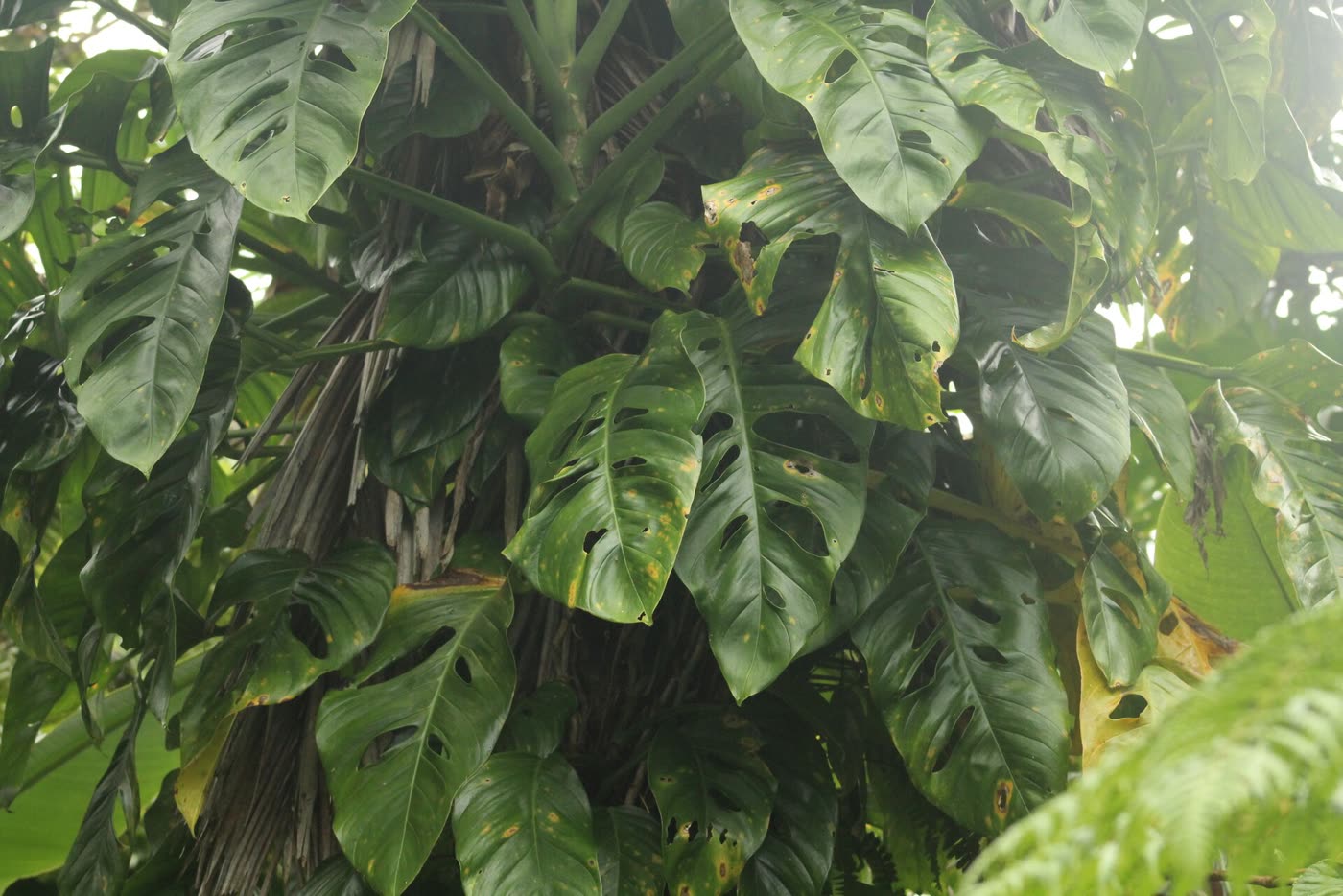
Monstera adansonii is the vine with oval leaves full of holes, not the big split leaf of deliciosa. Shops also sell narrow-leaf forms under the same name. Care is the same even when the leaf shape is not.
It is less forgiving of a completely forgotten pot than a ZZ, and more forgiving of a dim room than a fiddle leaf. The usual death is a tiny hanging pot that is either baked or left soaking in a cachepot.
Light
Bright indirect light. Holes get larger and more numerous when the plant is bright and climbing. In low light the new leaves come in smaller and more solid. Direct sun through a south window scorches the thin leaf. An east window is ideal.
Water
The mix should dry in the top inch or two. Because the leaves are thinner and the pots are often smaller, adansonii usually wants water more often than a large deliciosa. Check it. Do not share a calendar with your other monstera. Soak, drain, and never leave it in a saucer. Curling leaves and a light pot mean you are late. Yellow leaves and a heavy pot mean you are early.
Soil
Chunky aroid mix: bark, perlite, and a peat or coir base. A dense compost stays wet around the fine roots. Drainage is mandatory. A moss pole can be added while the plant is young, which is much easier than retrofitting a tangle.
Humidity and temperature
Happier above average household humidity, and it shows crispy edges when a heater blows on it. It does not need a cabinet if you water properly and keep it out of the draft. Brown, crunchy margins with healthy roots are the humidity symptom. Yellow soft leaves are not.
18–29°C (65–85°F).
Feeding
Half-strength balanced feed every two to four weeks in spring and summer. A pale, slow vine in a dark room needs light before food.
Repotting
Spring, one size up, when roots circle or the mix dries in two days. Do not bury the stem deeper than it was. Tie it to a support if you want the mature leaf form. Left as a trailer, the leaves stay smaller. That is a choice, not a failure.
Propagation
Single-node cuttings with a leaf root easily in water, moss, or perlite. Include the node. A wet stick with no node is waste. Pot cuttings once roots are a few centimeters long. Several nodes in one pot make a fuller basket.
Through the year
Winter growth slows and the small pot still dries if it is near a radiator, so do not switch off your attention entirely. Cold soil and frequent water rot it. Keep it warm and check the mix. A chilly windowsill is a bad winter home.
Pets and toxicity
Like other monsteras, it is toxic to cats and dogs. The trailing form is easy to bat. Hang it or accept chewed leaves and a sick pet.
Problems on this plant
- yellow leaves
Older yellow leaves with wet mix: ease off. Curled, crisp leaves: you waited too long.
- brown leaf tips
Thin leaves crisp at the edge in dry, hot air. Move it off the vent.
- leggy plants
Long bare internodes mean it is reaching. More light, and cut it back.
Do this in order
- Use a chunky mix. Bark and perlite, in a pot that drains. Small pots dry fast, which is a feature if you check them.
- Water on the top inch. Dry at the surface, still faintly cool below, is a good time. Sopping is not.
- Decide: trail or climb. A pole and brighter light produce larger, holier leaves.
- Propagate the leggy bits. Cut nodes and restart a fuller pot instead of feeding a bare string.
Questions
Why does my adansonii have no holes?
New leaves on a young or under-lit plant can be nearly solid. Increase bright indirect light and let it climb. A cutting taken from a hole-filled mother can still produce simpler leaves until it settles.
Monstera adansonii vs deliciosa?
Adansonii is a thinner-leaf vine with holes inside the leaf. Deliciosa is the big plant with splits that reach the edge. Adansonii usually dries faster and wants slightly higher humidity. Both are toxic.
Can it live in water forever?
A cutting can, if you change the water and eventually add a dilute fertilizer. Growth is stronger in a chunky mix. Roots grown in water are brittle when you finally pot them.
Tools that match this care
Tools that match this kind of plant. A paid link, when one is added, will be marked and will not change the advice above.
Chunky aroid mix
Bark, perlite, and a bit of peat or coir so monstera and philodendron roots get air.
Why this helpsA moss or coir pole
Monstera and climbing philodendron make larger leaves when the stem can root into a support.
Why this helpsA room humidifier
Calathea, ferns, and prayer plants brown at the edge when winter air drops below about 40% humidity.
Why this helps
Related plants
Ask the assistant about this plant. The first replies are free.